
Summary
The Electrify Society Summit – powered by Volt-Age – is a unique opportunity for stakeholders to unite in the urgent task of pioneering electrification and clean energy solutions in Canada and beyond.
A summit to unite stakeholders in the electrification space
The Electrify Society Summit – powered by Volt-Age – is a unique opportunity for stakeholders to unite in the urgent task of pioneering electrification and clean energy solutions in Canada and beyond.
This Summit will be an inclusive gathering of crucial stakeholders in the electrification space – academics and scientists, students, as well as industry, government and community representatives – to share information, identify challenges, propose solutions, network and initiate collaborations, all in the ultimate objective of creating lasting and just environmental change.
Details
EVENT DATES
May 5th & 6th, 2026
LOCATION
Palais des Congrès de Montréal
159, rue Saint-Antoine Ouest
Montréal, QC, H2Z 1H2
Speakers
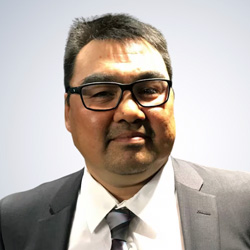
Eric Atagotaaluk
Director of Pituvik Sarvaq Energie Inc.
Eric Atagotaaluk
Born in Iqaluit, Nunavut, Eric has been living in Inukjuak, Nunavik since 1982. He was first elected board member of Pituvik Landholding Corporation (Pituvik LHC) in 1997, then appointed President of the Corporation in 2002. Among the corporation’s many mandates, initiating economic development projects for the community is a priority. Spearheaded by Pituvik, Pituvik LHC initiated the Innavik Hydro Project in 2008 as a community project on behalf of its members, to create sustainable development opportunities and tackle climate change by reducing greenhouse gases emitted from the community, who are largely dependent on diesel for electricity. Now employed as director for Pituvik Sarvaq Énergie since 2019, the corporation was created to be the other owner of the Innavik Hydro.
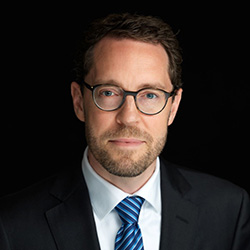
Grégoire Baillargeon
President, BMO Financial Group
Grégoire Baillargeon
Appointed President, BMO Financial Group, Quebec, and Vice-Chair, BMO Capital Markets, in November 2022, Mr. Baillargeon has been with the Bank of Montreal since 2004. A lawyer by training and an investment banker for nearly 20 years, Grégoire is actively involved in the community, notably as a member of the Board of Directors of the Chambre de commerce du Montréal métropolitain and of the Cercle des gouverneurs of Finance Montréal. He also supports numerous organizations working to reduce social and economic inequalities, including as Chair of the Board of Directors of Centraide of Greater Montreal and of the youth perseverance organization Fusion Jeunesse. Passionate about the energy transition and the fight against climate change, Mr. Baillargeon has also served as Vice-Chair of the BMO Climate Institute since September 2024. He recently joined the advisory board of Volt-Age: Electrification of Society. He also sits on the advisory board of Carbon Removal Canada. Under his leadership, BMO became the first bank to join the Partenariat Climat Montréal, in addition to launching ConVERTgence, two initiatives aimed at accelerating decarbonization and integrating sustainable business practices in the metropolis.

Pauline Baudu
Program Director – Climate Security, CDA Institute
Pauline Baudu
Programme Director – Climate Security, CDA Institute. PAULINE BAUDU is a researcher and policy analyst specializing in the intersection of climate change and security, with expertise in the Arctic and NATO policy. She is Director of the Climate Security Programme at the Conference of Defence Associations (CDA) Institute. She is also a researcher with the Raoul-Dandurand Chair at Université du Québec à Montréal, a Senior Fellow at Arctic360, an Associate at Arctic Security Consultants, and a member of NATO’s Research Task Group on the Effects of Climate Change on Security (SAS-182). Her work draws on prior experience in human rights and refugee law, including roles with the French National Asylum Court, the UN Human Rights Office, and civil society.

Amy Buckland
University Librarian at Concordia University
Amy Buckland
University Librarian at Concordia University. Amy Buckland has spent her entire library career working to advance open science initiatives at institutions in Canada and the United States, as well as during her term as Assistant Deputy Minister at Library and Archives Canada. She recently ended her time as co-chair of the Office of Chief Science Advisor of Canada’s Advisory Committee on Canadian Scientific Data Governance.
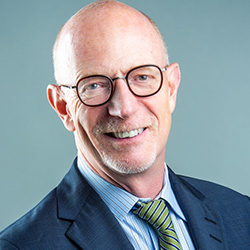
Graham Carr
President and Vice-Chancellor of Concordia University
Graham Carr
Graham Carr is president and vice-chancellor of Concordia University in Montreal. Ranked as one of the world’s best young universities, Concordia is home to approximately 49,000 students from more than 160 countries. Graham chairs the research committee of Universities Canada, which is the voice of Canada’s universities at home and abroad. He also leads the board of U SPORTS, the national brand for Canadian university athletics. He was previously president of the Canadian Federation for the Humanities and Social Sciences and an advisor to Canada’s National Capital Commission. Born in Quebec, Graham holds a PhD from the University of Maine.

Michelle Chrétien
Assistant Vice-President, Research Partnerships and Commercialization, Toronto Metropolitan University
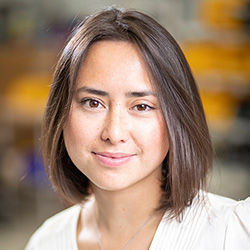
Vaitea Cowan
UK Lead at Fifty Years
Vaitea Cowan
UK Lead at Fifty Years. Vaitea Cowan leads Fifty Years’ UK 50/50 venture builder, where she works hands-on with early-stage founders transitioning from academia to building civilizationally important companies. Through the program, she supports cohort members building energy, agriculture, and science technologies, guiding them from the idea stage through company formation, raising capital, and securing commercial pilots. Previously, Vaitea co-founded Enapter, a green hydrogen technology company. Over seven years, she helped scale the company from an early startup to a public company, supporting the global deployment of thousands of modular AEM electrolyser units to customers in more than 50 countries.
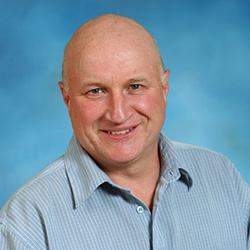
Jeff Dahn
Professor Emeritus in Physics and Chemistry, Dalhousie University
Jeff Dahn
Professor Emeritus in Physics and Chemistry, Dalhousie University. Jeff Dahn is a pioneering developer of lithium-ion batteries, widely used in laptops and cell phones. His research focuses on extending battery lifetimes to decades. He has authored over 640 scientific papers, holds 65 patents, and has an H-index of ~95. Born in 1957, he moved to Nova Scotia and earned his PhD from UBC. After roles at NRC Canada, Moli Energy, and Simon Fraser University, he joined Dalhousie University in 1996. A strong industry collaborator, he held a research chair with 3M and partnered with Tesla. Dahn has received numerous prestigious awards, including the Governor General’s Innovation Award and the Herzberg Gold Medal.

Tim Evans
Vice-President, Research, Innovation and Impact, Concordia University
Tim Evans
Vice-President, Research, Innovation and Impact, Concordia University. Tim Evans is Vice-President, Research, Innovation and Impact at Concordia University. He earned a medical degree from McMaster University and a DPhil in agricultural economics from the University of Oxford as a Rhodes Scholar. Before joining Concordia, Evans was the inaugural director and associate dean of the School of Population and Global Health at McGill University, where he also served as associate vice-president of global policy and innovation. He was executive director of Canada’s COVID-19 Immunity Task Force and held senior leadership roles at the World Bank, the World Health Organization, and BRAC University. Throughout his career, Evans has played a key role in advancing global health initiatives. He co-founded Gavi, the Vaccine Alliance, led the World Health Organization Commission on Social Determinants of Health, and worked to expand access to HIV treatment and midwifery training in Bangladesh.
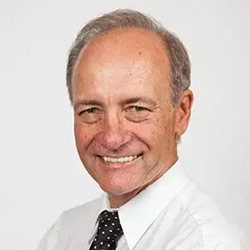
Denis Faubert
Strategic Advisor to Scale AI, former CEO of CRIAQ and CARIC, and former General Manager of Hydro-Québec’s Research Institute (IREQ)
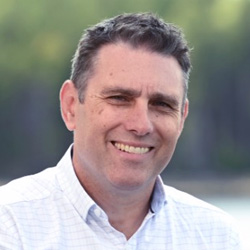
Graham Gagnon
VP research and innovation at Dalhousie University
Graham Gagnon
PhD, P.Eng., is Vice-President, Research & Innovation at Dalhousie University. An environmental engineer, Dr. Gagnon has held senior leadership roles at Dalhousie University, including Dean of Architecture and Planning and Associate Vice-President Research. As Director of the Centre for Water Resources Studies, his research and partnerships have advanced water quality, treatment, and security across Atlantic Canada, including supporting the establishment of the Atlantic First Nations Water Authority, Canada’s first Indigenous-led water utility. A former Canada Research Chair and NSERC Industrial Research Chair, Dr. Gagnon was named a Fellow of the Canadian Academy of Engineering and appointed to the Canadian Infrastructure Council in 2024.

Jennifer Garard
Director of Engagement, Living Labs and EDI, Volt-Age
Jennifer Garard
Jennifer Garard is the Director of Engagement, Living Labs, and EDI at Volt-Age. Her work focuses on bringing people together from diverse communities and research domains to create inclusive work environments where systemic challenges are tackled collectively. She has over ten years of experience working with non-profit, academic, and intergovernmental organizations to advance environmental sustainability. Jennifer completed a PhD at the Technische Universität Berlin, where she studied stakeholder engagement at the science-policy-society interface.
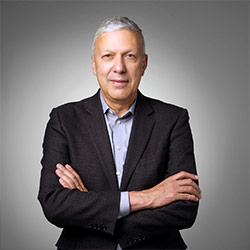
William A. Ghali
Vice-President (Research) at the University of Calgary
William A. Ghali
Office of the Vice-President (Research), University of Calgary. During his term as VPR, Dr. Ghali has overseen the creation of several new institutional initiatives, including the Institutes for Transdisciplinary Scholarship, the UCalgary Research Excellence Chairs program, and the UCalgary Visiting Scholars Program. Under Dr. Ghali’s leadership, UCalgary was named a top 5 research institution in Canada for the first time (2021) and a top start-up creator in Canada three years in a row (2021–2023). He also helped secure the institution’s second Canada First Research Excellence Fund (CFREF) grant for One Child Every Child, the largest research grant in UCalgary history. Dr. Ghali is a world-class researcher and Professor in the Departments of Medicine and Community Health Sciences at the University of Calgary. Dr. Ghali is also a physician specializing in General Internal Medicine (MD (1990) – University of Calgary, FRCP(C) (1994) – Queen’s University, Kingston, Ontario), and completed methodological training in health services research and epidemiology at the Boston University School of Public Health (MPH, 1995). Dr. Ghali was the scientific director of the O’Brien Institute for Public Health at the University of Calgary. Dr. Ghali has held millions of dollars of peer-reviewed research funding from a number of agencies through his research program focused on evaluating and improving health system performance for better patient outcomes and improved system efficiency. He is a Fellow of both the Canadian Academy of Health Sciences and the Royal Society of Canada, and is co-director of the University of Calgary World Health Organization (WHO) Collaborating Centre in Disease Classifications and Health Information.
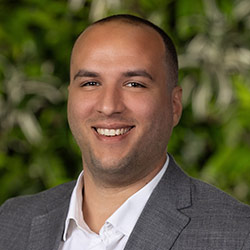
Ahmed Hanafy
Partner at Dunsky Energy and Climate Advisors
Ahmed Hanafy
Partner at Dunsky Energy and Climate Advisors. Ahmed advises utilities, system operators, governments, and other electricity stakeholders on the technical, policy, regulatory, and strategic issues impacting the sector’s transformation. Drawing on expertise in renewable energy, energy storage, electric vehicles, distributed energy resources, and other emerging technologies, his work informs and shapes clients’ corporate strategy, system planning, project development, and policy and regulatory initiatives. He is currently the Treasurer of the National Electricity Roundtable and a former board member of the Smart Grid Innovation Network. He holds a bachelor’s degree in electrical engineering, an MBA from McGill University, and a master’s degree in energy science from ETH Zurich.
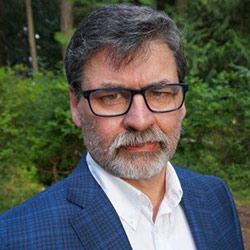
Markham Hislop
Energy/Climate Journalist, Energi Media
Markham Hislop
Markham is a Canadian journalist and CEO of Energi Media, one of Canada’s leading independent news organizations, currently celebrating its 18th year. Energi Media’s journalism is focused on video interviews with energy experts (currently between 3 and 6 million views per month), audio podcasts, and Substack essays (100,000 per month). Markham has developed an energy transition theory of change that incorporates disruptive innovations driven by clean energy technologies, which informs his journalism.
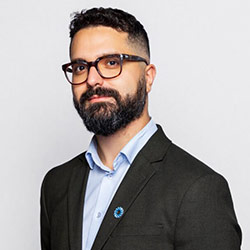
Moe Kabbara
Chief Executive Officer at The Transition Accelerator
Moe Kabbara
Chief Executive Officer. Moe Kabbara is an experienced energy and industrial policy professional with nearly 15 years of work at the intersection of technology, policy, markets, and supply chains. His work focuses on driving systems-level change across electricity, fuels, buildings, and industry. As CEO at the Transition Accelerator, Moe leads national and regional efforts to support the transformation of Canada’s energy and industrial systems. He oversees work on electricity system planning, building decarbonization, the future economy, low-carbon fuels, and regional implementation, working across sectors to align planning, investment, and execution. Previously, Moe was a Managing Consultant at Dunsky Energy + Climate, advising governments and utilities on clean energy strategies. He also served as a Senior Investment Officer at Innovation, Science and Economic Development Canada, where he focused on investment attraction in the battery and automotive sectors as part of Canada’s emerging industrial strategy. Earlier in his career, he co-founded and served as CEO of a thermal energy storage startup in Atlantic Canada. Moe also played a leading role in establishing Accelerate, Electrifying Canada, and the Building Decarbonization Alliance—national initiatives focused on aligning policy, industry, and infrastructure to enable economic and energy system transformation.
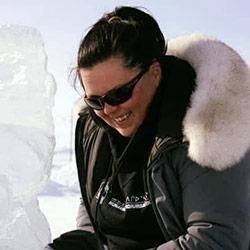
Sarah-Lisa Kasudluak
Vice President of the Pituvik Landholding Corporation in Inukjuak
Sarah Lisa Kasudluak
Vice President of the Pituvik Landholding Corporation in Inukjuak. Sarah Lisa Kasudluak made history as the first female president of the Pituvik Landholding Corporation and now serves as the organization’s first female Vice President. Under her leadership, Pituvik achieved a landmark partnership with Innergex Renewable Energy to develop the Innavik hydroelectric project—a $127 million facility that replaced diesel generators in Inukjuak with clean energy from the Inukjuak River. This marked the first-ever collaboration between an Inuit-owned corporation and an independent power producer. Kasudluak’s leadership reflects her commitment to honoring Inuit heritage while embracing contemporary opportunities for growth. She champions initiatives that bring together traditional knowledge and innovative approaches to community wellness and economic development. Among her key priorities is establishing a Healing Center rooted in traditional values—a vision born from her determination to address intergenerational trauma and revitalize cultural identity. Through her work with Pituvik, Kasudluak demonstrates how respect for the past can create pathways toward a sustainable, culturally grounded future. Her dedication to preserving Inuit traditions while fostering community development has made her an influential voice in northern Indigenous governance and cultural revitalization.
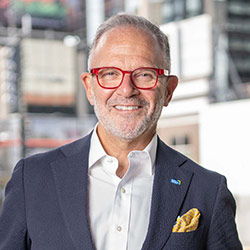
Steven N. Liss
Vice-President, Research and Innovation, Toronto Metropolitan University
Steven N. Liss
Steven N. Liss is Toronto Metropolitan University’s Vice-President, Research and Innovation, and a professor of Chemistry and Biology in the Faculty of Science. He is an experienced academic leader who has played a significant leadership role in the advancement of university education at the undergraduate and graduate levels at several universities. His recent return to Toronto Metropolitan University (formerly known as Ryerson University) in April 2017 follows a decade of distinguished service at the University of Guelph and at Queen’s University, where he served as Vice-Principal (Research) and a professor of Environmental Studies and Chemical Engineering since 2010.
For his contributions to Canada’s research and innovation ecosystem, Steven was awarded the Queen Elizabeth II Diamond Jubilee Medal in 2012. He has also held positions on a number of boards and councils: he was the Chair of the Ontario Council on University Research (OCUR) for 2015–16, and Chair of the Board of Management of TRIUMF, Canada’s national laboratory for particle and nuclear physics, for 2014–2016. He has played an important leadership role nationally in the advancement of support for digital infrastructure as the founding co-chair of the Leadership Council on Digital Infrastructure (LCDI) and a founding board member and Corporate Officer of Compute Ontario. He currently sits on the board of Compute Canada and previously served as the inaugural Chair of the Review Panel for the Ministry of Research and Innovation, Ontario Research Fund: Research Excellence program (Environment and Emerging Technologies Panel).
Steven is an internationally recognized researcher in the areas of environmental biotechnology and engineering, as well as wastewater and water management. He is also well known for his work in applied microbiology, which focuses on bioflocculation, microbial structures, and the fate of contaminants in engineered and natural environmental systems. Steven has an impressive funding track record, including industry and international support. He is an elected member of the Management Committee of the International Water Association Specialist Group, Microbial Ecology in Water Engineering (MEWE), and he has served as an elected researcher representative on the board of the Canadian Water Network.
His recent honours include a Visiting Professorship at the Advanced Environmental Biotechnology Centre affiliated with the Nanyang Environment and Water Research Institute at Nanyang Technological University in Singapore (2016); a Visiting Professorship with the College of Environmental Sciences and Engineering at Tongji University in Shanghai (2015–2018); and the position of High-End Foreign Expert of the State Administration of Foreign Experts Affairs for China.

Melina Laboucan-Massimo
Founder and Executive Director, Sacred Earth Solar & co-founder, Indigenous Climate Action
Melina Laboucan-Massimo
Founder and Executive Director, Sacred Earth Solar & co-founder, Indigenous Climate Action. Melina Laboucan-Massimo has worked on climate justice, Indigenous sovereignty, and women’s rights for over 25 years. Melina is Lubicon Cree from Northern Alberta, Canada. She is the founder of Sacred Earth and a co-founder of Indigenous Climate Action. Melina was the inaugural Indigenous Research Fellow at the David Suzuki Foundation, where her research focused on climate change, Indigenous knowledge, and renewable energy. She is the host of the TV docuseries “Power to the People,” which profiles Indigenous-led climate solutions in communities across the country. Melina holds a master’s degree in Indigenous governance from the University of Victoria, with a focus on energy transition. As part of her thesis, she implemented a 20.8 kW solar project in her home community of Little Buffalo, powering the local health centre in the heart of the tar sands. She has studied, campaigned, and worked in Brazil, Australia, Mexico, Canada, and across Europe, focusing on resource extraction, climate change impacts, media literacy, and Indigenous rights and responsibilities.
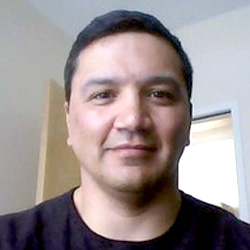
Tommy Palliser
Executive Director of the Nunavik Marine Region Wildlife Board
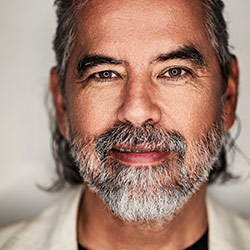
Henk Rogers
Founder of Blue Planet Alliance
Henk Rogers
Founder of Blue Planet Alliance. Henk Rogers will share his journey from a pioneering career in the video game industry to his mission to eliminate anthropogenic CO₂ emissions. His talk highlights his early achievements, including creating Japan’s first role-playing game and helping bring Tetris to global prominence as one of the most widely played games of all time. A near-death experience prompted a shift in focus toward his life’s purpose. He subsequently founded the Blue Planet Foundation with the goal of ending the use of carbon-based fuels in Hawaiʻi. Hawaiʻi has since become a model for clean energy transition, becoming the first U.S. state to mandate 100% renewable energy by 2045. Since the law’s passage in 2015, 15 other states have followed, meaning over half of the U.S. population now lives under similar mandates. Building on this success, Rogers launched the Blue Planet Alliance to expand this model globally. To date, the Alliance has brought 39 islands or island nations and 6 countries to Hawaiʻi to demonstrate pathways to achieving 100% renewable energy. This bottom-up approach has proven effective where top-down efforts often fall short. Today, Hawaiʻi has reached approximately 38% renewable energy and continues to push forward to stay on track. Rogers emphasizes that progress is driven not by “hope,” but by “determination.”

Aphrodite Salas
Associate Professor, Journalism, Concordia University; Co-leader of Theme 3, Volt-Age
Aphrodite Salas
Associate Professor, Journalism, Concordia University; Co-leader of Theme 3, Volt-Age. Aphrodite Salas is a journalist and professor at Concordia University in Montreal, Canada, where her research focuses on mobile journalism, collaborative journalism with Indigenous communities, and more specifically, the decolonization of journalism education. She is also part of the management team of Volt-Age, a multi-year $123 million electrification research project based at Concordia University. Her leadership role in Volt-Age is centred on public policy and stakeholder engagement. Her most recent work created exclusively with mobile journalism is called “Arctic Shift to Clean Energy.” The multimedia project shares a story of Inuit climate leadership and was screened at both the UN Climate Conference COP27 and the UN Biodiversity Conference COP15 alongside Indigenous partners. Aphrodite is also a research partner of the School of Journalism and Mass Communications at Aristotle University of Thessaloniki, where she has lectured at the Thessaloniki International Media Summer Academy since 2020. A veteran journalist with decades of experience in news and feature reporting, Aphrodite started producing short documentaries at the Reuters East Africa bureau in Nairobi. She later spent most of her on-air career at CTV, Canada’s largest privately owned network. She has worked as a national correspondent, anchor, video journalist, and assignment editor across markets of all sizes, and has received six RTDNA awards for excellence in news reporting.
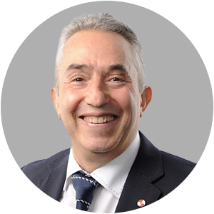
Karim Zaghib
Chief Executive Officer, Volt-Age
Karim Zaghib
Chief Executive Officer, Volt-Age. Dr. Karim Zaghib is a world-renowned scientist specializing in rechargeable batteries, energy transition, and the electrification of transportation. His many seminal scientific publications in these fields have earned him numerous honours and distinctions. He is regularly invited to international conferences as an expert speaker to address issues and share his vision regarding energy storage and new battery technologies. As director of research on the development of materials for lithium-ion batteries at Hydro-Québec, he helped make it the world’s first company to use lithium iron phosphate (LFP) in cathodes and to develop natural graphite and nanotitanate anodes. Dr. Zaghib was also one of the pioneers of the first photo-battery with two electrodes and in MWh high-capacity energy storage based on LFP/graphite through a joint-venture collaboration with Sony. Dr. Zaghib is the CEO of Concordia University’s $123M CFREF program, Volt-Age, where his focus is on achieving net-zero electrification of transport in both urban environments and, in partnership with the Indigenous Clean Energy consortium, in northern, remote, and Indigenous communities across Canada. As Director of the Collaborative Centres on Energy and its Transition (C2ET), his mission is to set the benchmark for the design and industrialization of renewable energy systems by developing integrated systems based on electrochemical devices, new generations of batteries, and hydrogen production, in order to bring these systems to market equitably and affordably. His team’s most recent advances are paving the way for the next generation of electric vehicle batteries and energy storage solutions, an area in which Québec and Canada are well positioned to play a leading role.

The Electrify Society Summit brings together academics, students, industry players, government officials, and community stakeholders for thoughtful discussions, problem solving sessions and many networking opportunities.
Key themes

Canada’s leadership in the energy transition: past, present, and future

Beyond the grid

Financing the energy transition: new approaches, new frameworks

Breakthroughs, barriers, and next steps in electrification research
Sponsor our Summit
Give your organization visibility among key stakeholders in the electrification space and help us make this summit a valuable experience for all.






Contribute & connect
We invite Volt-Age-funded researchers and students, industry partners and other stakeholders to apply to submit a poster, a 3-minute pitch video, present and/or hold an on-site demonstration of an innovation in electrification/decarbonization.
We’re also planning special networking opportunities, including those that will bring together students, industry and government.